


Loading…
Loading…
Loading…
Loading…
Loading…
Loading…

An emerging semiconductor hub, backed by next-generation manufacturing, integrated infrastructure and India's growing ambitions in global technology.
The National Industrial Corridor Development Programme is a Government of India initiative for developing integrated industrial cities and economic hubs. Implemented by NICDC, the programme spans 11 industrial corridors and 32 projects across the country.
Stretching approximately 1,504 km along the Western Dedicated Freight Corridor, DMIC connects major industrial and economic regions across six states. It is India’s first and flagship industrial corridor under the national corridor programme. DMIC brings together major industrial and logistics developments across its route, creating a network of manufacturing, logistics and economic centres.
Dholera SIR spans 920 sq. km and is planned as a greenfield smart industrial city, bringing industrial, residential, commercial and supporting infrastructure together through an integrated planning framework. DICDL (Dholera Industrial City Development Limited): the project SPV is responsible for implementing the Dholera SIR development and its trunk infrastructure.
Planned as one city.
Developed in phases.
The 22.54 sq. km Activation Area, covering TP-2A and TP-4A, is the first development area within Dholera SIR. It brings together industrial, residential, commercial and supporting uses, with core trunk infrastructure developed for the area.
GAP Group’s residential, commercial and industrial portfolio is strategically located within Dholera SIR’s Activation Area.
The National Industrial Corridor Development Programme is a Government of India initiative for developing integrated industrial cities and economic hubs. Implemented by NICDC, the programme spans 11 industrial corridors and 32 projects across the country.
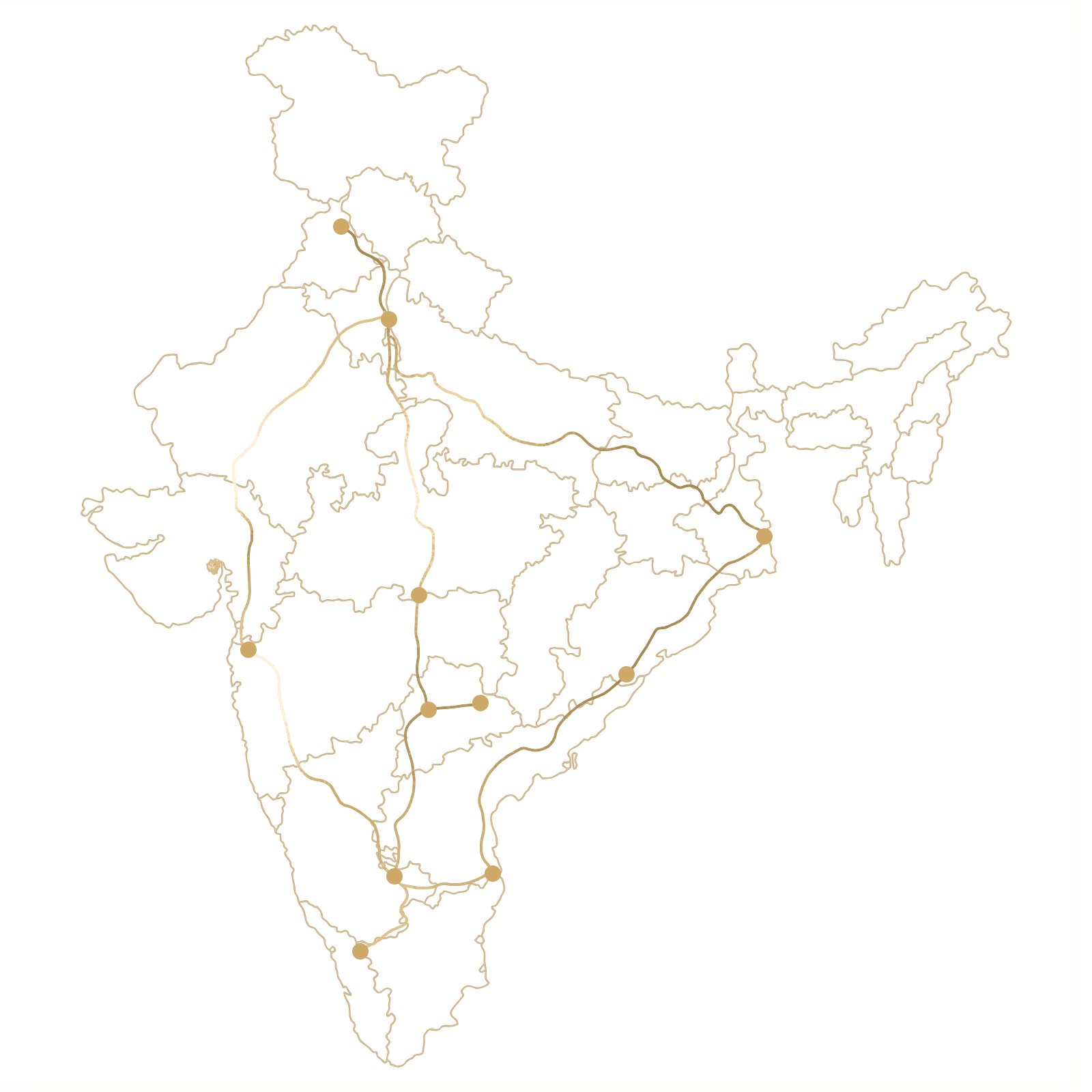
Stretching approximately 1,504 km along the Western Dedicated Freight Corridor, DMIC connects major industrial and economic regions across six states. It is India’s first and flagship industrial corridor under the national corridor programme. DMIC brings together major industrial and logistics developments across its route, creating a network of manufacturing, logistics and economic centres.
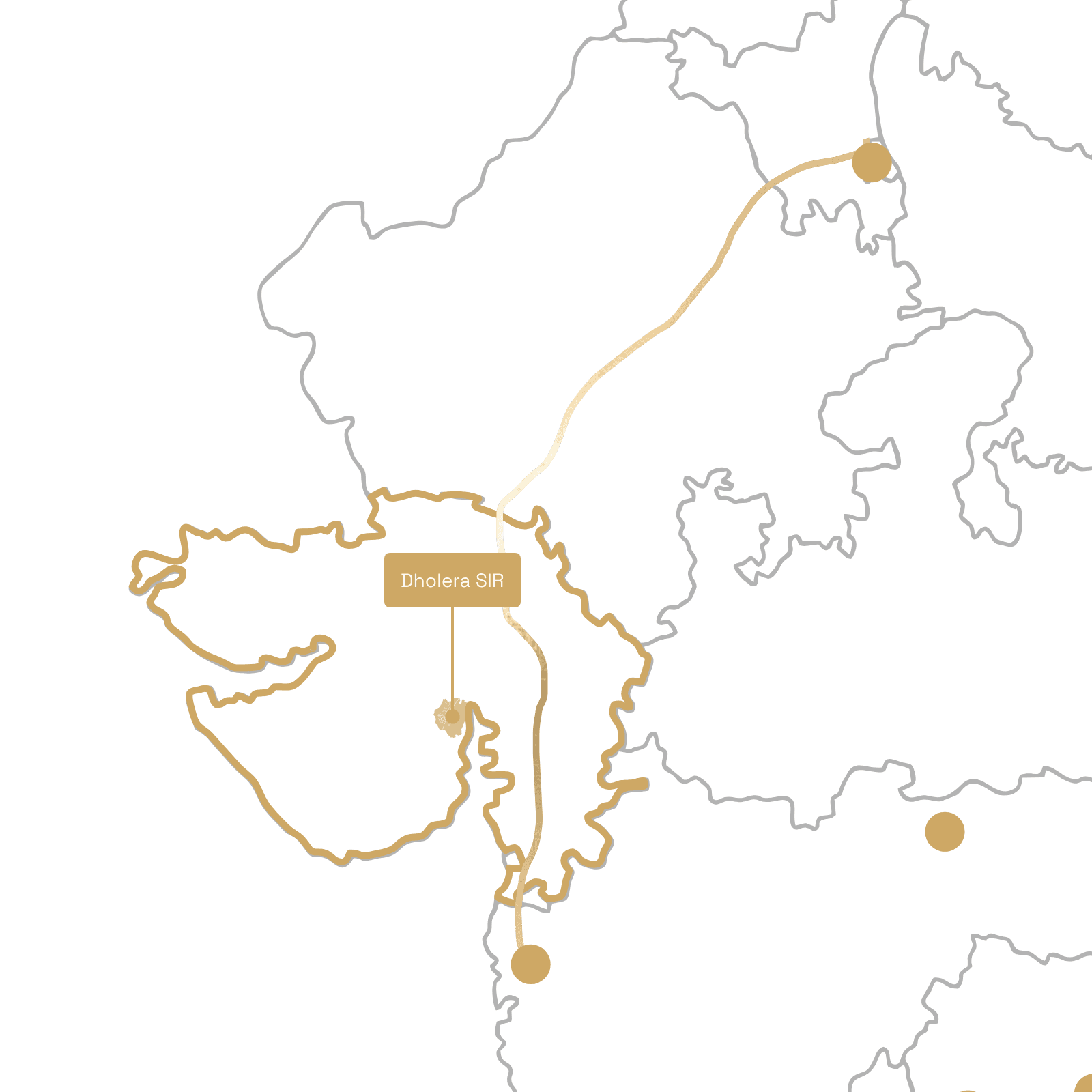
Dholera SIR spans 920 sq. km and is planned as a greenfield smart industrial city, bringing industrial, residential, commercial and supporting infrastructure together through an integrated planning framework. DICDL (Dholera Industrial City Development Limited): the project SPV is responsible for implementing the Dholera SIR development and its trunk infrastructure.
Planned as one city.
Developed in phases.
The 22.54 sq. km Activation Area, covering TP-2A and TP-4A, is the first development area within Dholera SIR. It brings together industrial, residential, commercial and supporting uses, with core trunk infrastructure developed for the area.
GAP Group’s residential, commercial and industrial portfolio is strategically located within Dholera SIR’s Activation Area.
Dholera’s multimodal network connects the city to regional, national and global markets, supporting the movement of people, goods and industry.

Ahmedabad–Dholera Expressway
109 km four-lane, access-controlled expressway. Now operational, connecting Ahmedabad directly to Dholera.

Dholera International Airport
3.2 km runway with core airside infrastructure complete. The passenger terminal is designed for 20 lakh passengers annually.

Bhimnath–Dholera Rail Link
India’s first semi-high-speed rail corridor connecting Ahmedabad and Dholera. 134 km | 220 km/h planned operating speed.

Port access
~200 km to Pipavav Port and ~300 km to Kandla Port. Dholera is connected to Gujarat’s wider port network for industrial cargo.
Explore the planning principles, infrastructure and industrial framework behind India’s emerging smart city.
A planned industrial destination for next-generation manufacturing, anchored by Dholera’s emerging semiconductor ecosystem.

Semiconductor manufacturing
₹91,526 crore Tata Electronics fab under development in Dholera SIR. 50,000 wafer starts/month planned capacity.

Electronics & electrical equipment
₹99,160 crore projected investment in the Dholera SIR Electronics Manufacturing Cluster, with 28,787 jobs projected.

Aerospace
Embraer and Adani have selected Dholera SIR for a proposed aircraft final assembly line. First aircraft targeted for 2028.

Defence
Dholera SIR is positioned for aerospace and defence manufacturing, with a dedicated park proposed.

Heavy engineering
Dholera SIR offers industrial plots from 1 to 330 acres, designed for large-scale engineering units.

Renewable energy
ReNew has 2.5 GW cell and 2.4 GW module facilities in Dholera SIR. A 1,000 MW solar park is also being developed.

Data centres
Gujarat targets 7.5 GW of data centre capacity by 2029. Dholera SIR projects qualify for a 2.5% capital subsidy.

Logistics & warehousing
Road links in place, with rail, air and port links planned, support Dholera SIR's plan to become a regional logistics and manufacturing hub.
A structured framework for land allocation, with 17 land-use categories and 546 individually mapped parcels across Dholera SIR.
As Dholera prepares for its next phase of growth, the groundwork is setting the stage for new industries, businesses and opportunities to take root.
A growing focus for industry, investment and policy, as developments across the region bring Dholera into the national conversation.

You’ve seen the plan.
Now stand inside it.
Walk the Activation Area with our team, and see the roads, utilities and projects for yourself, not on a masterplan.
Dholera SIR is in Gujarat, on the Delhi–Mumbai Industrial Corridor (DMIC). It spans 920 sq km and is planned as a greenfield smart industrial city, bringing industrial, residential, commercial and supporting infrastructure together through one integrated plan.
The 22.54 sq km Activation Area, covering TP-2A and TP-4A, is the first development area within Dholera SIR. It already has core power, water and ICT infrastructure, and it is where GAP's developments stand.
By the Ahmedabad–Dholera Expressway, a 109 km four-lane, access-controlled road that is now operational. A 134 km semi-high-speed rail corridor between Ahmedabad and Dholera SIR is also planned, at 220 km/h.
The industrial plan spans semiconductors, electronics, aerospace, defence, heavy engineering, renewable energy, data centres and logistics. Projects include the Tata Electronics fab (under development), ReNew's cell and module facilities, and a proposed Embraer and Adani aircraft final assembly line.
This is a common misconception. Dholera SIR is not just about real estate. It’s an ecosystem for industrial, residential, and commercial growth, designed to meet global benchmarks in sustainability, technology, and infrastructure. From industrial hubs to green spaces, and from smart utilities to an integrated governance framework, Dholera SIR is planned as India’s first truly smart city, designed to attract global investments.
The Delhi-Mumbai Industrial Corridor (DMIC) is a visionary $90 billion infrastructure project, with Dholera SIR as one of its critical nodes. Dholera benefits from the DMIC’s advanced freight corridors, which enhance trade and industrial connectivity. The region is planned to contribute to DMIC’s goals of doubling employment, tripling industrial output, and quadrupling exports within five years.
Dholera SIR is a government-backed initiative, overseen by the Dholera Special Investment Region Development Authority (DSIRDA). While it enjoys full support from the government, the region actively encourages private-sector participation to foster innovation and drive investments. Its smart infrastructure and governance model are aligned with global standards, ensuring transparency and accountability in operations.
Two dedicated bodies share the work. DICDL builds the trunk infrastructure, and DSIRDA, the Dholera Special Investment Region Development Authority, plans and oversees the region.
Dholera SIR is being developed as a global/smart city due to its strategic location, planned infrastructure, and immense potential for growth. It is part of the Delhi-Mumbai Industrial Corridor (DMIC) and has been envisioned as a smart city with a focus on sustainable development. Its planned industries, high-tech infrastructure, global connectivity, and excellent transportation facilities are intended to make it a hub for international business and trade.
Dholera is being developed as a Special Investment Region (SIR) because of its vast potential for industrial development, proximity to major cities and ports, and its role in the Delhi-Mumbai Industrial Corridor. The region is designed to offer a business-friendly environment with planned infrastructure, policies encouraging foreign direct investment (FDI), and easy access to transportation networks. The goal is to make Dholera a global hub for emerging industries.
Dholera was selected for development as a Special Investment Region (SIR) due to its strategic geographical positioning in Gujarat, proximity to key industrial hubs, and accessibility to the Delhi-Mumbai Industrial Corridor (DMIC). The area spans 920 square kilometres and offers ample space for industrial, residential, and commercial development. The region is well-connected via sea ports, making it feasible to deliver goods across nations and has plans for road, rail, and air transport connectivity. Moreover, Gujarat has a business-friendly environment and policies that encourage foreign and domestic investment.
Dholera SIR stands out from other smart cities due to its greenfield development approach, which means it is being built from the ground up without the constraints of existing infrastructure. This allows the city to adopt cutting-edge technologies for smart infrastructure and urban planning. Unlike many smart city projects that focus on retrofitting, Dholera is designed to be fully integrated with smart governance systems, sustainable energy management, high-tech public services, and efficient transportation systems, making it more scalable and adaptable. The city’s special designation as a Special Investment Region and its integration into the DMIC also provide it with significant economic advantages.
India needs Dholera SIR as part of its broader strategy to become a global manufacturing and industrial hub. As urban centres become crowded and saturated, new regions like Dholera provide space for industrial expansion, smart urban living, and sustainable development. Dholera is also crucial for India’s goal of achieving economic self-sufficiency, attracting foreign investment, and generating employment. It is intended to serve as a model for future smart city developments across the country.
Dholera is a very time-consuming project
Major infrastructure projects like Dholera SIR, which cover vast areas and aim to create a full-scale smart city from scratch, are naturally time-intensive. As a greenfield smart city project, Dholera is being developed on land where nothing has ever been built before, making it a more complex and time-consuming process compared to retrofitting existing cities. However, significant progress has already been made in key phases such as road construction, utility corridors, and the airport, where core airside work is complete. While delays are typical for projects of this scale, the long-term benefits and the transformative potential of Dholera SIR are expected to far outweigh the initial time investment.
Dholera is in the Khaar path area of Gujarat
While Dholera SIR is located in a coastal region, extensive studies were conducted to ensure it is free from major environmental risks. If one looks at the official map of Dholera SIR, it is clear that the Khaar path (salted bed) area has been designated as a coastal zone by the government and is not intended for any construction.
Previous smart cities didn’t work out, why will Dholera succeed?
Dholera SIR is different from other smart city projects because it has the backing of both the central and state government, strong public-private partnerships, and international investment. It is being developed under the DMIC, which links it to an industrial corridor that is expected to create demand for businesses, housing, and services, making it full of resources. Unlike other smart cities, Dholera has a well-defined long-term vision, is free from existing urban congestion, and is receiving focused attention for its industrial and infrastructural growth.
Why haven’t we seen much development since 2014?
Large-scale urban development projects, especially those aimed at creating entire cities, take time to build foundational infrastructure, including roads, utilities, and transportation networks. A significant portion of the work on these projects often happens below the surface – literally and figuratively – before visible results are apparent. In Dholera’s case, the first phase has already seen substantial progress, with land development, road construction, and essential utilities like electricity and water distribution being laid down. The activation area is now approximately 97% complete, marking a major milestone toward making Dholera a fully operational smart city.
Dholera is Modi Ji’s project; what if the central government changes during the 30-year development period?
While Dholera has been supported by the current government, the project is backed by both the central and state governments, making it a robust and strategically significant initiative. The development is rooted in long-term economic planning and international investment, ensuring its continuity beyond any one political source. The Delhi-Mumbai Industrial Corridor (DMIC), a core driver of Dholera’s growth, is a national initiative, and the importance of industrial and infrastructure development transcends political cycles. In contrast to earlier smart city projects, where certain challenges emerged, Dholera SIR has addressed these through meticulous planning, establishing it as a sustainable and resilient project that aims to keep attracting investors, irrespective of political changes.